Median Year-1 federal savings: $42,984 · IQR $38,246–$44,260

Asheville, NC cost segregation: what 5 representative properties actually produce

Engine-derived ROI benchmarks for Asheville-area short-term rentals, single-family rentals, and small commercial properties. Numbers come from running real fixtures through the Cost Seg Smart engine, same engine that produces your actual study. Studies from $495.

Operated by Cost Seg Smart. Studies are IRS-aligned with engineer review included. 5 fixture benchmarks computed May 2026.

The Asheville numbers, distilled

$42,984
Median Year-1 federal savings (100% bonus, 37% bracket)
Interquartile range: $38,246 – $44,260
23.4%
Median reclassification ratio
IQR: 23.3% – 25.7% · Full range: 17.5% – 26.2%
18.6%
Median land allocation
IQR: 18.0% – 19.2%
5
Representative fixtures
Spanning 5 Asheville sub-markets

Numbers above are engine-estimated outputs from running 5 representative fixtures, not promises about what your specific property will produce. Results vary based on actual property condition, year built, renovation history, county assessor data quality, and rental treatment (STR vs LTR). Full per-fixture table, neighborhood breakdown, and downloadable CSV/PDF on the Asheville cost seg benchmarks page.

Why Asheville is different

Asheville sits between two distinct cost-seg profiles, and the right strategy depends on which side of the market you're on. The mountain STR cabin economy, Black Mountain, Weaverville, and the broader Buncombe County corridor outside Asheville city limits, operates similarly to Gatlinburg or Broken Bow: cabin product with high FF&E density, lower land allocations (18–22%), and engine reclassification ratios that routinely hit 24–28%. The downtown Asheville historic SFR market, the Montford historic district and downtown-adjacent residential, operates more like downtown Breckenridge: 1890s–1920s structural shells with heavy post-2010 renovation, where the renovation cost pool drives the math rather than the original construction.

North Carolina's partial decoupling from federal §168(k) is the structural wrinkle. NC has historically allowed only 85% of federal bonus depreciation in Year 1, with the remaining 15% added back on the NC return and recovered over five subsequent years. For a 2025+ acquisition under OBBBA's restored 100% federal bonus, that means 15% of the accelerated reclassification dollars hit a modest NC-side timing mismatch, at NC's 4.5% flat rate, the absolute dollar impact is small (roughly $675 on every $100K of accelerated reclass), but it should be modeled into your CPA workflow rather than ignored. The federal benefit at 100% is unaffected; only the state-side acceleration is partially deferred.

The buyer profile is unusually first-time-STR-friendly. Asheville attracts inland-Southeast buyers (Atlanta, Nashville, Charlotte, Birmingham) who are doing their first STR purchase, Asheville cabin pricing is meaningfully lower than Gatlinburg or Park City for similar property profiles. Cost-seg education is part of the conversion conversation, and clear before/after federal-plus-NC math wins.

North Carolina state tax position: North Carolina partially decouples from federal §168(k) bonus depreciation. NC historically allowed only 85% of federal bonus depreciation in Year 1, with the remaining 15% added back to NC taxable income and recovered over 5 subsequent years on the state schedule. For 2025+ acquisitions under OBBBA's 100% federal bonus, the practical effect is that roughly 15% of the accelerated reclassification dollars are added back on the NC return in Year 1 (then recovered over five years), at NC's 4.5% flat rate, that's a small but real timing mismatch. Federal §168(k) at 100% is unaffected; only the NC-side acceleration is partially deferred.

Decoupling: Verify current-year NC conformity treatment with your CPA, North Carolina's bonus depreciation methodology has been modified multiple times over the past decade, including changes to the addback percentage and recovery period. The federal deduction itself is unchanged; the NC-side reconciliation is the variable.

Verify with your CPA. State tax conformity rules for federal §168(k) bonus depreciation are adjusted frequently, multiple states have modified their treatment two or more times in the past decade. The general framing on this page reflects our understanding as of May 2026, but you should always verify current-year treatment with a qualified CPA or tax attorney before relying on specific dollar projections for your situation.

Engine outputs: 5 Asheville fixtures

These aren't rough estimates. Each fixture was run through the same engine that produces your actual study, RSMeans 2024 base costs, BLS PPI time index, county assessor land allocation, IRS Pub. 946 / Rev. Proc. 87-56 MACRS classification, 100% bonus depreciation per OBBBA.

Illustrative Montford historic SFR downtown Asheville

Downtown Asheville Historic SFR

$47,907
Year-1 federal savings @ 37% bracket, 100% bonus
Purchase price$685,000
Depreciable basis$553,480
Land allocation19.2%
5-year reclassified$89,852
15-year reclassified$37,196
Total reclass23.4%
Downtown Asheville / Montford · SFR · STR · Built 1905
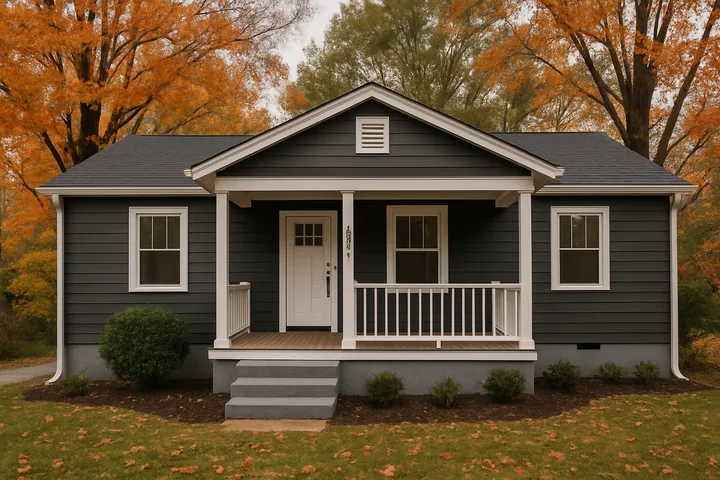
Illustrative West Asheville renovated mid-century SFR

West Asheville Renovated SFR STR

$37,134
Year-1 federal savings @ 37% bracket, 100% bonus
Purchase price$525,000
Depreciable basis$430,290
Land allocation18.0%
5-year reclassified$70,900
15-year reclassified$27,997
Total reclass23.3%
West Asheville / Candler · SFR · STR · Built 1948
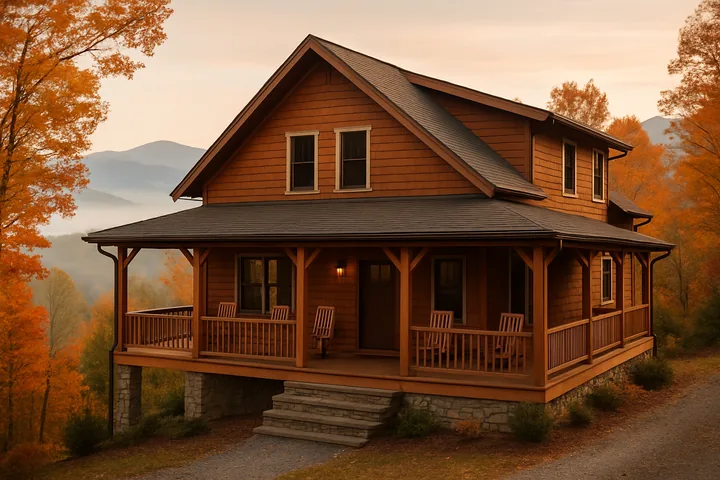
Illustrative Black Mountain mountain cabin near Asheville

Black Mountain Cabin STR

$44,260
Year-1 federal savings @ 37% bracket, 100% bonus
Purchase price$565,000
Depreciable basis$465,899
Land allocation17.5%
5-year reclassified$88,705
15-year reclassified$28,440
Total reclass25.7%
Black Mountain · SFR · STR · Built 2008
Illustrative Weaverville modest cabin near Asheville

Weaverville Modest Cabin STR

$38,246
Year-1 federal savings @ 37% bracket, 100% bonus
Purchase price$485,000
Depreciable basis$394,984
Land allocation18.6%
5-year reclassified$76,647
15-year reclassified$24,674
Total reclass26.2%
Weaverville · SFR · STR · Built 2012
Illustrative Biltmore Park South Asheville SFR

Biltmore Park SFR LTR

$42,984
Year-1 federal savings @ 37% bracket, 100% bonus
Purchase price$825,000
Depreciable basis$664,538
Land allocation19.4%
5-year reclassified$70,753
15-year reclassified$45,421
Total reclass17.5%
Biltmore Park / South Asheville · SFR · Built 2010

Deep dive on each example →

Asheville neighborhood profiles

Cost-seg ROI varies more by neighborhood than by city. Asheville's 5 sub-markets each have their own land-allocation pattern and property archetype:

NeighborhoodTypical valueTypical land allocationProfile note
Downtown Asheville / Montford $685,000 ~30% Historic downtown Asheville and adjacent Montford historic district, 1890s–1920s Queen Anne, Craftsman, and Bungalow SFRs heavily renovated. Higher land allocation due to urban-core scarcity. Walkable to downtown amenities.
West Asheville / Candler $525,000 ~24% Mid-century SFR and bungalow stock west of the French Broad River. Strong post-2015 renovation and fix-and-flip activity. Lower land allocation than downtown. Mix of LTR and STR.
Black Mountain $565,000 ~22% Small mountain town 15 miles east of Asheville. Cabin and mountain-home STR stock. Lighter regulatory regime than Asheville city. Strong STR demand from Asheville-overflow traffic.
Weaverville $485,000 ~20% Buncombe County north of Asheville, lower entry pricing, larger lot sizes. Lower land allocation. Mix of LTR rental and emerging STR cabin product.
Biltmore Park / South Asheville $825,000 ~28% Master-planned community south of downtown Asheville. Higher-priced SFR and condo product. Mid-tier land allocation. More LTR than STR given the residential-resident community profile.

Methodology note: "Typical land allocation" reflects baseline patterns for the sub-market. For ultra-premium or resort-tier inventory where reconstruction cost exceeds 2.0× the implied depreciable basis after subtracting baseline land, the engine applies a premium land floor (~50%) to keep the study within audit-defensible territory. This means individual fixture engine output may exceed the neighborhood typical, especially for resort-tier ski-in/ski-out, beachfront, or view-premium product where land scarcity dominates value. See the /data/ page for per-fixture land-source attribution. Results vary substantially by specific property condition, renovation history, and assessor records.

Regulatory context

City of Asheville STR ordinance is restrictive within city limits. Asheville's Homestay program restricts short-term rental operation to owner-occupied primary residences with annual registration; non-primary-residence STR operation is largely prohibited inside city limits. Buncombe County unincorporated areas operate more permissively, Weaverville town, Black Mountain town, and broader unincorporated Buncombe County allow non-primary-residence STR operation subject to county lodging tax registration. STR-intent buyers should verify the property's jurisdiction carefully, the Asheville city ordinance can apply even to addresses with Asheville mailing addresses if the structure is within city limits. Material participation under §469 is achievable for self-managing operators given Asheville's relatively modest professional-management ecosystem; many cabin owners self-coordinate via Hospitable or OwnerRez and clear the >100-hour test reasonably easily.

For the full IRS-rule reference layer (§168(k), §469 material participation, state conformity), see irsdepreciationrules.com, our open reference site.

Asheville cost segregation FAQ

Does North Carolina's partial bonus depreciation addback meaningfully affect Asheville cost-seg math?

Modestly. NC has historically allowed only 85% of federal §168(k) bonus depreciation in Year 1, with the remaining 15% added back to NC taxable income and recovered over five subsequent years. For 2025+ acquisitions under OBBBA's restored 100% federal bonus, that means 15% of your accelerated reclassification hits a NC-side timing mismatch at 4.5%. For an Asheville cabin owner taking $80,000 of accelerated reclassification, federal Year-1 savings at 37% is $29,600. NC Year-1 savings is approximately $80,000 × 85% × 4.5% = $3,060 in Year 1, with an additional $540 recovered in each of years 2–6. Total NC-side savings is the same as full conformity ($3,600); only the timing is mismatched. Verify current treatment with your CPA, NC's addback percentage has been adjusted multiple times in recent years.

Is downtown Asheville or Black Mountain a better STR market for cost segregation?

Black Mountain wins on regulatory clarity and reclassification ratio. Inside Asheville city limits, the Homestay ordinance restricts STR to primary residences only, most absentee investors can't operate Asheville-proper properties as STRs, which means the §469 short-term-rental loophole doesn't apply and the property is treated as a standard rental. Black Mountain (separate municipality with permissive STR rules) supports non-primary-residence STR operation, which lets the engine apply STR FF&E uplift and produces higher reclassification ratios. For STR-intent buyers, the jurisdictional choice is more impactful than the cost-seg study itself.

Does the City of Asheville Homestay ordinance affect cost segregation?

Not the study's component classification or MACRS recovery period assignment, those are federal tax-law-driven and unaffected by local STR rules. What it affects is how the property is treated for §469 purposes. If you can't operate the Asheville property as a non-primary-residence STR (which Asheville's Homestay ordinance generally prohibits), the property is treated as a standard rental under §469's passive-loss rules. The cost-seg deductions still apply but they're passive losses unless you have offsetting passive income, qualify as a real-estate professional, or convert the property to a primary residence with hosted-stay STR operation. For Buncombe County unincorporated properties (Weaverville, Black Mountain unincorporated areas), the STR ordinance doesn't apply and standard §469 STR-loophole treatment is available.

Why is renovation cost-segregation worth pursuing on a historic downtown Asheville Montford SFR?

Historic 1890s–1920s Queen Anne and Craftsman construction in Montford has the same renovation-cost-seg dynamic as downtown Breckenridge or Old Town Park City. Original-construction structural components (heart-pine framing, plaster, original plumbing, original knob-and-tube electrical) sit in the 27.5-year residential category and don't reclassify meaningfully. But Montford properties have typically seen substantial post-2000 renovation: full electrical updates (5-year work), kitchen and bath gut-renovations (5-year FF&E + fixtures), HVAC additions (mixed 5/27.5), front-porch and decking restoration (15-year land improvements), and STR-furnishing packages where the property is STR-eligible. Engine treatment of renovation_cost as a separate allocable pool means heavily renovated Montford SFRs often see 50–70% of their accelerated component come from the renovation pool rather than the original structural shell.

How does Asheville compare to Gatlinburg for cabin STR cost segregation?

Same str_mountain_lake / str_smokies cohort treatment in our engine, similar property archetype mix at the entry price point. The structural differences: Tennessee has no state income tax (Gatlinburg cost-seg produces federal-only savings cleanly); North Carolina partially decouples (Asheville cost-seg has the modest NC-side addback timing). Property values run slightly lower in Asheville on average ($545K median in our fixtures vs $575K for Gatlinburg). Engine reclassification ratios are nearly identical (17–28% range for both). For a buyer flexible between the two, Gatlinburg wins on state tax position; Asheville wins on the broader sub-market spread (mountain cabin + downtown historic + master-planned community) and on entry-level pricing in Weaverville and parts of Black Mountain.

More general cost-seg questions answered at costsegsmart.com/faq/.

Ready to run your Asheville study?

Cost Seg Smart studies are IRS-aligned, engineering-reviewed, and include written audit defense. Pricing is transparent and starts at $495 for residential properties under $300K, full pricing on the main site.